
Fingerprints on Black Wooden Doors: Why They Show and How to Clean Them
Door care · Wooden doors · Surface finishes
A customer replied to our marketing email with a question we receive often on dark doors. This is the message, and our full answer.
About 2 years ago I bought around 50 black wooden doors from Nicole at BLOSSOM CHEER. My customer is complaining that they are always figure prints on the door. Can you recommend something to clean it with to prevent prints every time you touch the door.
Customer message · reply to our marketing emailFingerprints on black/dark finishes are an inherent optical property of the finish, not a quality defect. Clean with a damp soft cloth and mild neutral cleaner; please do not use alcohol, thinner or other organic solvents.

Why dark (black) finishes show fingerprints
A fingerprint is not damage. It is a thin film of natural skin oil and sweat left on the surface every time the door is touched. Whether it is visible comes down to one thing: how differently the film reflects light compared with the surface underneath.
- Dark surfaces amplify the contrast: a near-black surface absorbs light, while the oil film is smoother and shinier, so it reads as a bright patch against the dark background — clearly visible. The same mark on white or pale grey is almost invisible.
- Sheen matters as much as colour: gloss behaves like a mirror and reports every smudge, water spot and wipe streak; flat matte hides ordinary marks, but on a dark flat matte the oily fingerprint shows up as a shiny patch; textured and woodgrain finishes hide marks best.
- Conclusion: “dark colour + smooth finish” is the combination most likely to show prints. This is an inherent optical property of the colour and finish, not a quality defect.
- Environment: in humid regions hands sweat more and marks appear more often; dark doors also absorb more heat, which can make oily marks more noticeable.
Recommended cleaning methods (by soil level)
Golden rules: dust first, keep the cloth damp not wet, wipe along the wood grain, dry immediately, and always spot-test a hidden area before using a new product.
| Soil level | Recommended method | Tools / cleaners | Notes |
|---|---|---|---|
| Daily dust, light fingerprints | Dry wipe | Microfiber cloth | 1–2 times a week removes most dust and light prints |
| Normal fingerprints / hand marks | Damp-wipe along the grain, then dry-buff | Well-wrung soft cloth + warm water (a few drops of mild dish soap optional) | Spray cleaner onto the cloth, never onto the door; dry immediately after wiping |
| Stubborn oily marks | Neutral cleaner wipe → clean-water cloth → immediate dry wipe | Neutral cleaner, dedicated door/panel cleaner wipes, lightly dampened nano sponge (gentle circular motion) | Diluted white vinegar can help cut grease; spot-test first |
| Lacquered door care | Apply furniture care wax after cleaning | Furniture care wax / wood wax | Apply a thin coat only; cleans, protects sheen and prevents dulling |
- Remove surface dust with a dry microfiber cloth so grit cannot scratch the finish.
- Mix a few drops of mild dish soap with warm water; dampen a soft cloth and wring it until it is not dripping.
- Wipe section by section along the wood grain, focusing on handles and edges (high-touch areas).
- Go over the surface once with a clean damp cloth to remove soap residue.
- Dry immediately with a second dry soft cloth to prevent water marks and edge dampness.

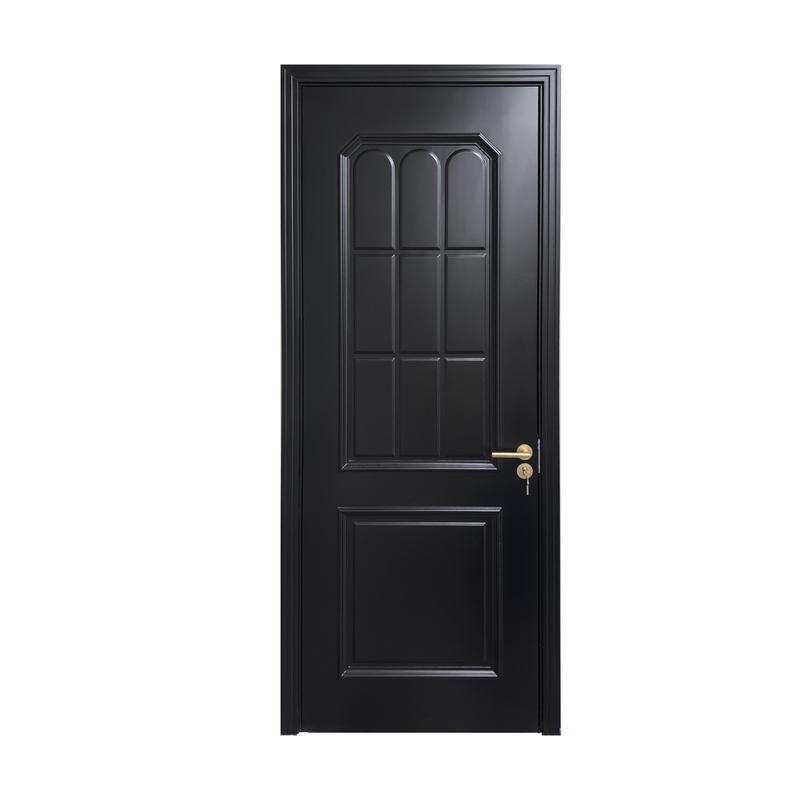
About alcohol and paint thinner: not recommended
The habit of cleaning Apple devices with a little alcohol or mild thinner does not apply to wooden doors: Apple devices use glass/metal panels with special coatings, while doors use paint, lacquer or PET/PVC film finishes with very different tolerance.
Alcohol
Most door manufacturers explicitly prohibit it. Alcohol corrodes lacquer and matte/soft-touch film finishes, causing whitening, loss of sheen, blotches and colour loss. Third-party testing also shows ethanol can penetrate UV-cured lacquer films, break down the polymer structure and cause swelling or gloss changes.
Paint thinner / banana water
A strong organic solvent that dissolves paint, varnish and film finishes, causing colour loss, blotching or peeling. It also contains toxic components such as toluene, irritates the respiratory tract, may damage the nervous system, liver and kidneys, and its vapour is flammable. Never use it for routine cleaning.
Correct alternative: for daily prints, use a well-wrung cloth with neutral cleaner; for stubborn grease, use diluted white vinegar or a dedicated furniture cleaner after a spot test.
Suggested customer reply: Fingerprints on black/dark finishes are an inherent optical property of the finish, not a quality defect. Clean with a damp soft cloth and mild neutral cleaner; please do not use alcohol, thinner or other organic solvents.
Do's and don'ts & prevention
Avoid: steel wool, stiff brushes, abrasive pads/powders; strong acids/alkalis, bleach or ammonia; flushing with water or leaving wet cloths on the surface; cleaning in direct sunlight; spraying cleaner directly onto the door.
Prevent: install handles so hands touch hardware instead of the panel; get into the habit of opening the door by the handle; dust regularly with a dry cloth to reduce oil build-up; apply a thin wax layer for protection; improve ventilation and dehumidification in humid regions to reduce sweaty hands.
For future purchases: if dark doors are preferred again, choose matte/soft-touch or anti-fingerprint finishes, or woodgrain/textured surfaces, which show prints far less.