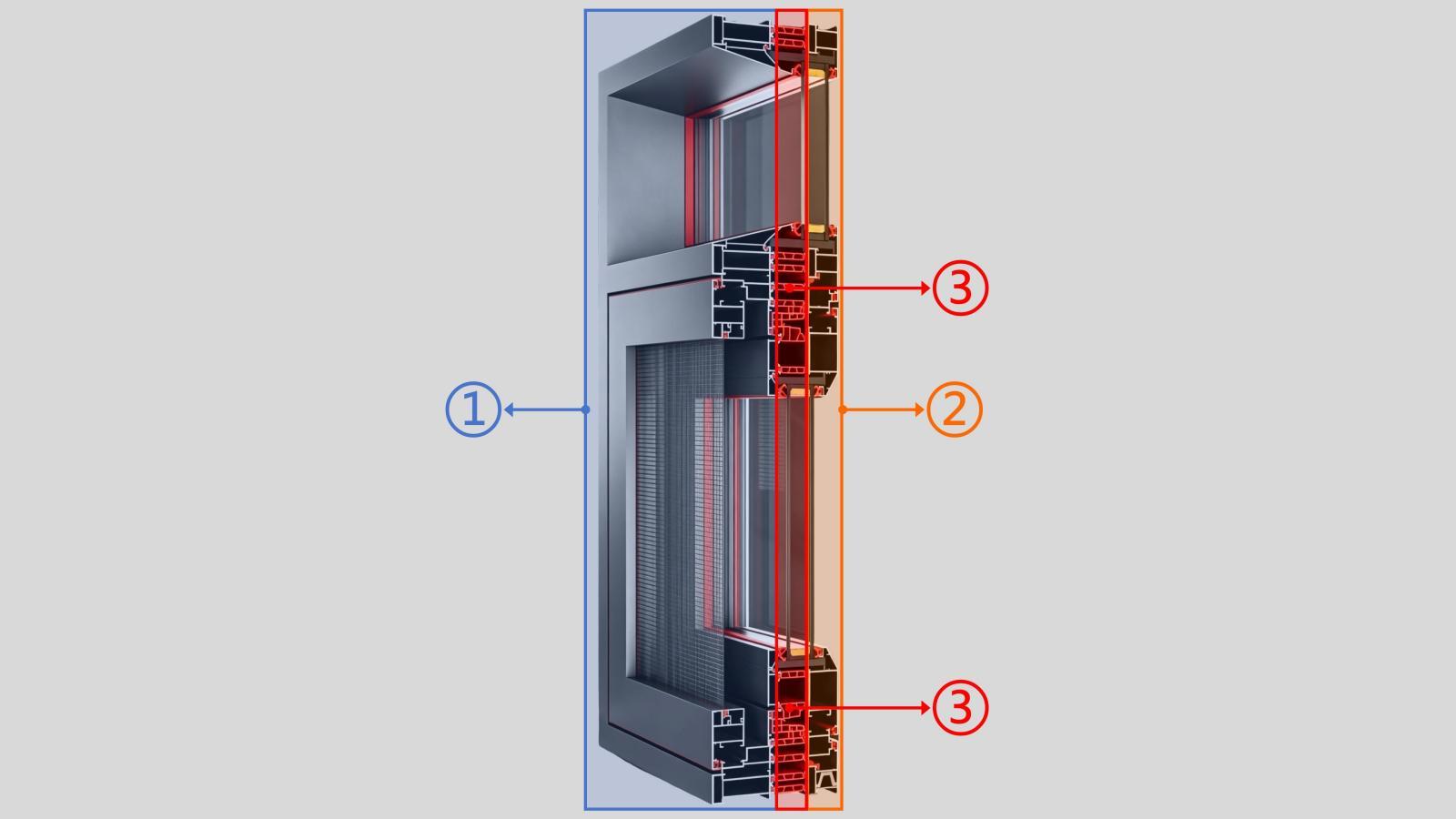
① Exterior aluminum profile ② Interior aluminum profile ③ Thermal break
Thermally Broken Aluminum Windows: How They Work and What to Check
Thermally broken aluminum windows use a low-conductivity material to separate the interior and exterior
aluminum sections of the frame and sash. This interrupts a direct metal path for heat transfer. Also called
thermal break aluminum windows, they combine an aluminum structure with an insulating connection—but that
connection alone does not establish the performance of the complete window.
For a building project, the useful question is what sits behind the product description. Where is the thermal
break? Which glass is included? Does the performance document describe the window being quoted? This guide
explains the structure first, then provides a practical way to review those details before placing an order.
What Are Thermally Broken Aluminum Windows?
Aluminum provides a conductive route through a window frame. A thermal break introduces a less conductive
connection between the metal portions facing outdoors and indoors. The word “broken” describes the interruption
of that thermal path; it does not mean the frame is damaged or left disconnected. The joining system must still
perform its structural role.
The NFRC Consumer Guide to Windows describes this
approach as separating frame components and joining them with a less conductive material. Look for that
separation in the actual section drawing rather than assuming that a thick profile, a hollow chamber, or a dark
finish proves a frame is thermally broken.
How Does a Thermal Break Work?
When indoor and outdoor temperatures differ, heat flows from the warmer side toward the cooler side. An
uninterrupted aluminum section offers an easy conductive route. A thermal break adds resistance along that
route. It reduces heat flow through the frame; it does not stop all heat transfer through the window.
The same principle applies when the warmer side is outdoors. However, heat conducted through the frame is only
one part of a building’s cooling load. Solar heat entering through the glass also needs attention, so improving
the frame cannot replace appropriate glazing selection.
What materials make the connection?
Designs include mechanically joined polyamide strips and poured polymer barriers. In a pour-and-debridge
process, the polymer sets in a profile pocket before part of the metal bridge is removed. Material names alone
do not tell you how a complete window will perform.
Ask for a drawing that identifies the thermal connection in the specified frame and sash. If a supplier
highlights a wider strip or deeper frame, ask how that change affects the documented window configuration. Treat
the dimensions as design information, not as a substitute for a whole-window rating.
Thermally Broken vs. Standard Aluminum Windows
Here, “standard” means a non-thermally-broken aluminum frame. Keep the glazing and operating type comparable
when reviewing alternatives. Changing the frame, glass and opening style together makes it difficult to
attribute any performance difference to the thermal break itself.
Frame comparison: what the distinction does and does not establish
Question
Non-thermal-break aluminum
Thermally broken aluminum
Conductive path
A direct metal connection links the two sides.
A lower-conductivity connection interrupts that path.
Frame heat transfer
The continuous metal route facilitates conduction.
The break reduces conduction through that route.
Condensation
Cold interior surfaces can collect moisture under suitable humidity conditions.
Warmer interior frame surfaces in cold weather can reduce risk; condensation remains possible.
Whole-window result
Requires information about the complete assembly.
Also requires information about the complete assembly.
Air, water and sound performance
Evaluate separately for the specified product.
Do not infer these results from the thermal break label.
For a bid comparison, use a separate line for each proposed window configuration. Record what changed and which
document supports the quoted result. A broad “better insulation” statement is less useful than a clearly
identified product, glazing package and rating scope.
Thermal Break Frames and Double Glazing: Different Jobs
A thermal break addresses conduction through metal frame sections. Double glazing consists of two glass panes
separated by a sealed cavity; together they form an insulated glass unit, or IGU. Low-E coatings modify
radiative heat transfer, while gas fills and spacers are further parts of the glazing design. These features
work together but are not interchangeable. The Department of Energy’s window
technology guide explains the components separately.
A window can have double glazing without a thermally broken frame. Equally, a thermally broken frame may be
offered with several glass packages. When a quotation says “insulated window,” request the frame description and
the glass specification separately so both parts of the offer are clear.
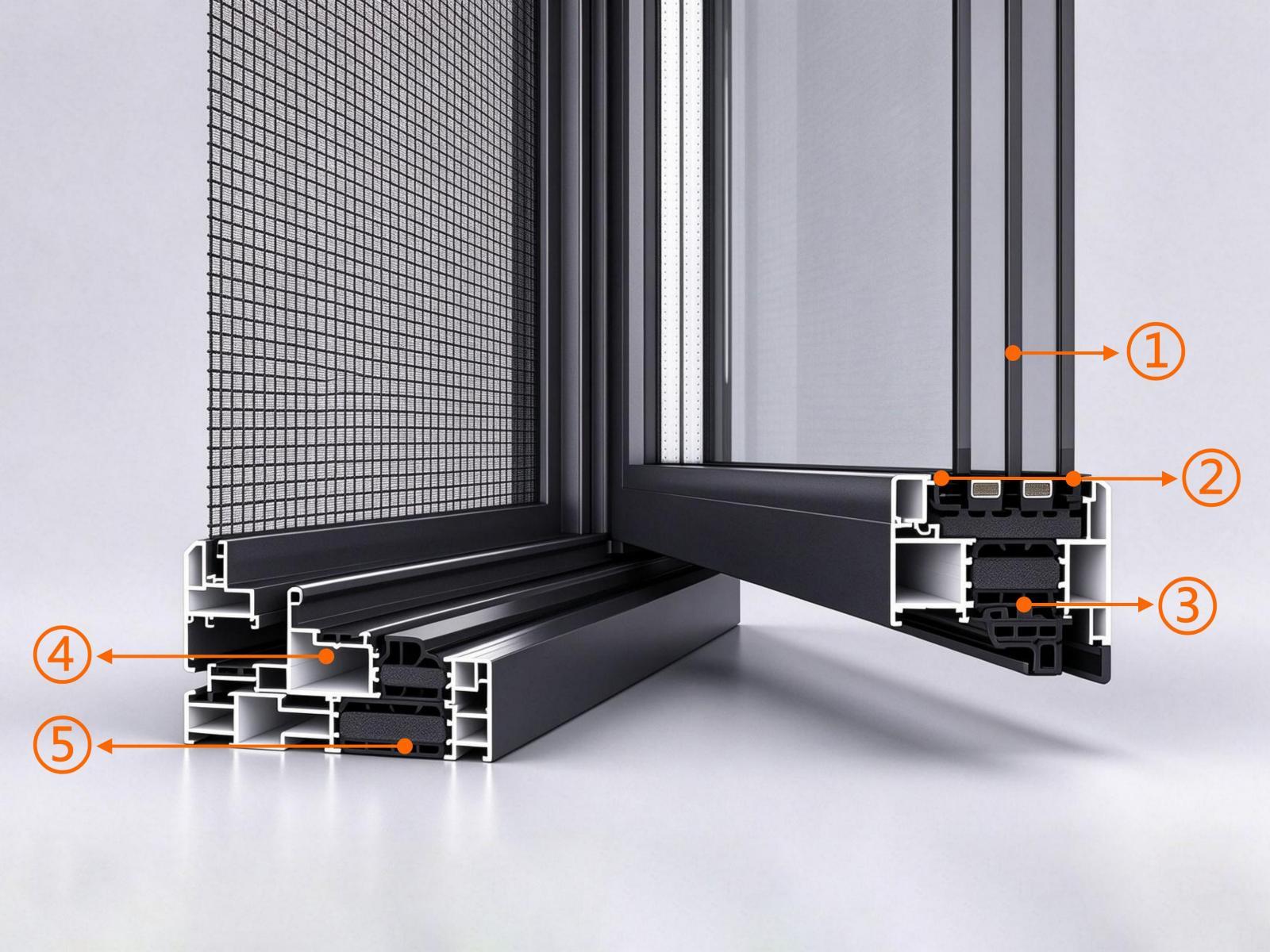
① Glass panes ② Glazing seals ③ Sash profile ④ Frame chamber ⑤ Thermal break
What Determines Whole-Window Performance?
Read the scope of the U-factor
U-factor describes heat transfer through a material or assembly: a lower value means less heat flow under
comparable conditions. Check whether a quoted value covers glass alone or the complete window. Also check the
units—U.S. ratings commonly use Btu/(h·ft²·°F), while metric documents use W/(m²·K). Raw numbers in different
units cannot be compared directly. See the NFRC consumer
glossary.
You may also encounter Uf for the frame, Ug for glazing and Uw for the
complete window in international documentation. A frame-only value does not establish the whole-window result,
and converting units does not make different rating methods equivalent.
The DOE
window performance guide explains that NFRC ratings use specified product sizes and environmental
conditions. Ask whether the proposed configuration falls within the supporting documentation. A rated reference
size need not match every ordered opening exactly; the important issue is the documented scope and how it
applies to the supplied product.
Consider solar gain and air leakage separately
Solar heat gain coefficient, or SHGC, describes the fraction of solar heat admitted. Air leakage describes air
passing through the product. Neither is established by the phrase “thermal break.” NFRC explains these ratings. Select project targets with the design team,
considering climate, orientation and shading rather than applying one universal window specification.
Keep structural, water-penetration and acoustic requirements in the review as separate items. If a project
needs evidence for any of them, request the relevant report and check its configuration. A thermal specification
should not silently stand in for the rest of the window schedule.
Include the installation interface
A factory product rating does not approve the wall connection. Review the perimeter air seal, flashing and
drainage arrangement, attachment method and continuity with the surrounding wall. Assign responsibility for
those details before manufacture, particularly when one company supplies the windows and another installs them.
What to Check Before Specifying or Ordering
Start with the proposed window schedule and use the following checklist to request a consistent set of
documents. The aim is to connect the drawing, quotation and performance evidence to the same configuration—not
to collect the largest possible folder of unrelated certificates.
A practical specification review checklist
Check
Request
Question to resolve
Frame and sash
Series-specific sections and thermal-break description.
Where are the interior and exterior aluminum sections separated?
Glazing
Pane build-up, cavity, coating, gas and spacer specification.
Does the quoted glass match the performance documentation?
Size and operation
Window schedule, opening type and configuration drawings.
Are fixed, sliding and hinged units identified separately?
Energy performance
Whole-product results, units, rating method and applicable scope.
Is a glass-only result being used to describe a complete window?
Other project requirements
Applicable air, water, structural and acoustic evidence.
Which requirements are supported, and which remain to be resolved?
Installation
Coordinated wall-interface and drainage details.
Who designs, checks and carries out the installation?
If NFRC certification is claimed, use the Certified
Products Directory to check the relevant listing and details. For commercial work, ask which
project-specific documentation applies. NFRC certification provides energy-performance information; it is not
blanket approval of every building-code, structural or installation requirement.
Choose between these systems by opening method and project requirements, then compare whole-window
results for the quoted size and glazing. Frame features alone do not establish a U-factor or project suitability.
A useful follow-up request would identify the required opening sizes and glass package, then ask for the
corresponding whole-window evidence and installation details. If the glass or opening arrangement changes during
quotation, confirm whether the supporting information still applies before accepting the revision.
For example, consider two proposals for the same opening: one supplier provides a glass data sheet, while the
other provides a whole-window rating. Even if the first proposal shows a lower number, the comparison is
incomplete. Ask both suppliers for results with the same scope and units, then record any differences in glazing
or operating type. If comparable evidence is unavailable, mark the item as unresolved rather than assuming the
better-looking number represents the better window. This simple review step keeps an attractive quotation from
becoming an unsupported performance commitment.
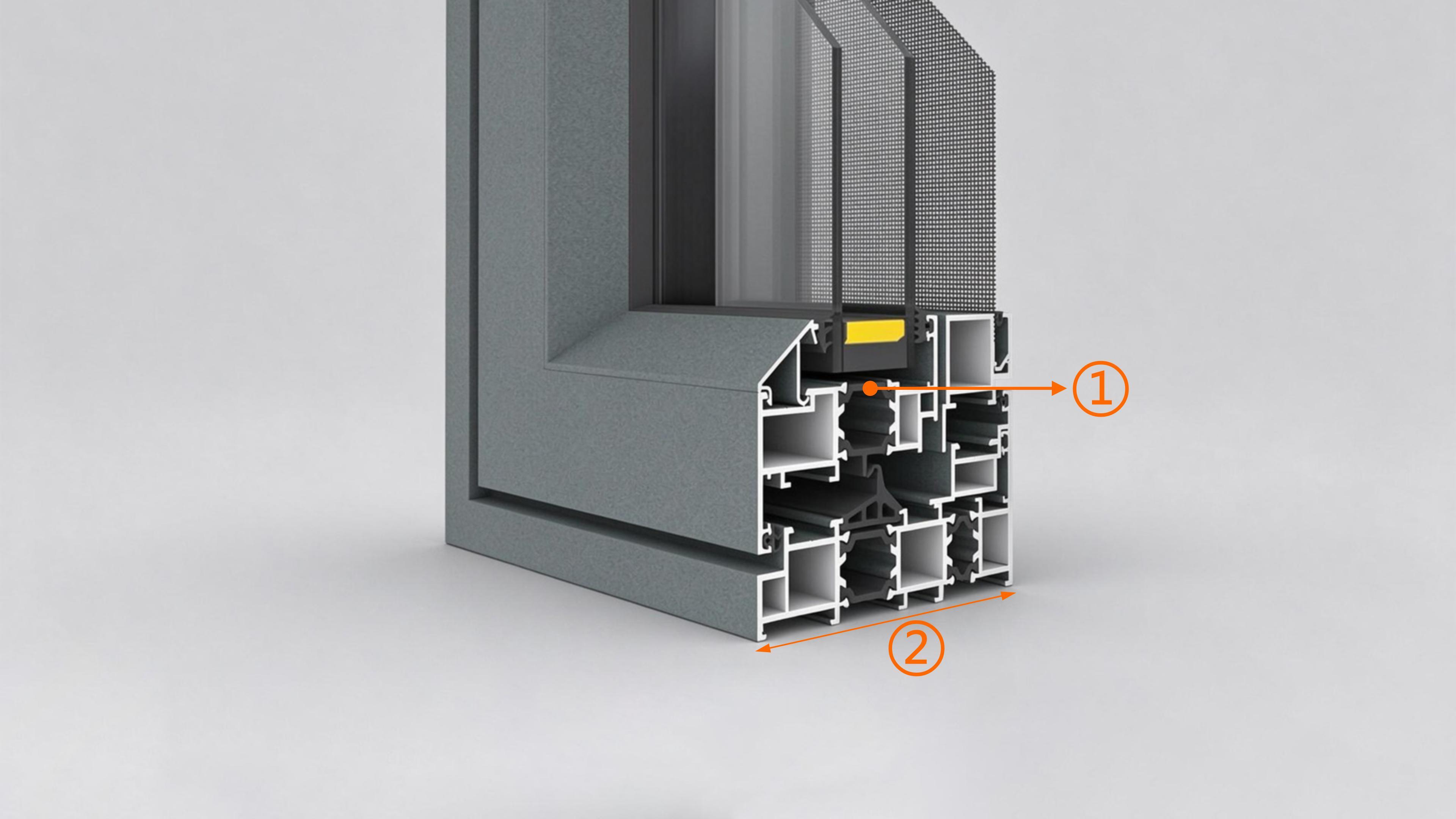
① Profile detail ② Frame depth
Frequently Asked Questions
Are all aluminum windows thermally broken?
No. Confirm the design using the manufacturer’s section drawing and product specification. Double glazing,
thick aluminum walls and a modern appearance do not establish whether the frame contains a thermal break.
Can a thermal break completely prevent condensation?
No. Condensation can occur when a surface is below the dew point of the adjacent air. Indoor humidity,
outdoor conditions and local surface temperatures matter. A thermal break can help keep interior frame
surfaces warmer in cold weather, but humidity control and installation details still need attention. The NFRC glossary defines condensation and dew point.
Are thermally broken windows suitable for cold climates?
They can be, provided the complete window meets the project’s requirements. Review the whole-window thermal
result, glazing, condensation-related information and installation design. The frame description alone is
insufficient to select a product for severe winter conditions.
How much do thermally broken aluminum windows cost?
A useful quotation needs dimensions, quantity, opening type, glass, finish, hardware and delivery scope.
Ask suppliers to separate supply, shipping and installation where applicable. A price for one fixed window
is not a reliable benchmark for a differently sized operable unit or an entire project.
Are they worth the additional cost?
Compare documented performance and complete installed cost against the project’s targets. Where an upgrade
is being considered, keep the comparison scope consistent. A fixed energy-saving percentage or universal
payback period cannot be inferred from the presence of a thermal break.
Are thermally broken aluminum windows better than vinyl?
There is no universal winner based on frame material alone. Compare actual products against the same
thermal, size, appearance, operation and maintenance requirements. This material comparison deserves a
separate evaluation once the project brief is clear.
Bring the Project Requirements into the Window Selection
A thermal break explains an important part of the frame design. A sound selection also connects the glazing,
documented performance and installation to the building’s needs.
BLOSSOM CHEER provides door and window project solutions for
commercial, hospitality and luxury residential buildings worldwide. When discussing thermal break aluminum window systems with the team, provide the project location, window schedule and performance targets, and ask for
the proposed configuration and its supporting documentation.